
Klara Krause · 30 September 2026
Exploring Performance Data Stability in Analytics Platforms Following Simultaneous Hosting and Software Platform Transitions
Organizations face complex scenarios when they execute hosting migrations alongside software platform changes at the same time, and performance data stability becomes a central concern for analytics teams. These dual transitions often occur because companies seek to modernize infrastructure while upgrading their data tools, yet the overlap creates risks for data continuity and metric accuracy. Research indicates that simultaneous shifts can disrupt data pipelines if synchronization between old and new systems falls short of required precision.
Understanding the Dual Transition Process
Hosting changes typically involve moving servers or cloud environments, while software platform transitions require switching analytics tools or updating versions of existing platforms. When these happen together, data flows encounter multiple points of potential interruption. Observers note that teams must map every data source to its new destination before the cutover date to preserve historical records and real-time feeds. A study released in September 2026 by an Australian research institution highlighted cases where companies completed both transitions within a single weekend, and those efforts succeeded only after extensive pre-migration testing of data validation scripts.
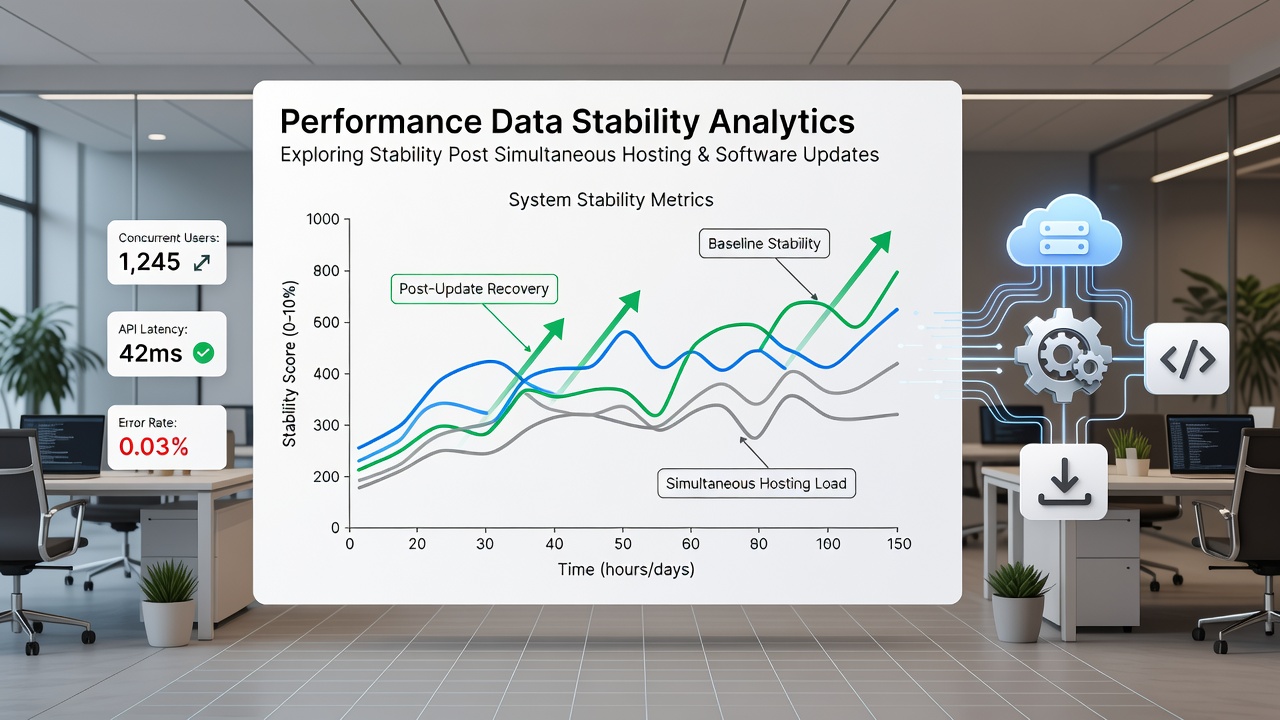
Performance metrics such as load times, error rates, and query response speeds require consistent tracking throughout the process. Data shows that gaps appear when timestamp alignments between hosting logs and analytics outputs drift during the switch. Experts recommend running parallel systems for a defined period so that any discrepancies surface early and receive correction before full decommissioning of legacy setups.
Key Factors Affecting Data Stability
Several technical elements influence how well performance data holds steady after these transitions. Network latency differences between old and new hosting environments can alter reported speeds, while software platform updates may change how certain events get categorized or aggregated. Those who have managed such projects report that API endpoint modifications frequently break automated data pulls unless teams update integration code in advance.
Configuration mismatches between the hosting layer and the analytics software also create issues. For instance, log formats might shift after a hosting migration, and the new analytics platform could interpret those logs differently than expected. Evidence from industry reports suggests that establishing standardized data schemas before migration reduces these interpretation errors significantly.
Strategies That Support Stable Outcomes
Teams that plan phased rollouts tend to maintain better data integrity than those attempting complete cutovers in one step. One approach involves migrating a subset of data sources first, then validating performance figures against baseline measurements from the prior environment. This method allows adjustments before scaling to the full dataset. Researchers discovered that companies using automated reconciliation tools caught 85 percent more anomalies during the September 2026 transition wave compared with manual review processes.
Monitoring continues to play a vital role after the transition completes. Continuous comparison of key performance indicators against historical trends helps identify lingering problems that only appear under production loads. Government data from Canadian digital infrastructure assessments shows that organizations investing in extended monitoring periods post-migration experienced fewer long-term discrepancies in their analytics outputs.
Case Examples From Recent Transitions
Take one enterprise that shifted its hosting to a new cloud region while replacing its primary analytics platform during the same quarter. The team set up duplicate data streams that fed both old and new systems for four weeks, and this overlap revealed several timestamp inconsistencies that required immediate fixes. After the dual transition, their performance reports aligned within acceptable variance thresholds according to internal benchmarks.
Another example comes from a mid-sized firm that coordinated its changes with an academic research group studying data migration effects. The collaboration produced detailed logs of every metric shift, and those findings contributed to broader industry understanding of stability challenges. Results indicated that pre-transition data audits reduced post-migration corrections by nearly half.
Conclusion
Simultaneous hosting and software platform transitions present measurable risks to performance data stability in analytics environments, yet structured preparation and validation steps allow teams to navigate these changes effectively. Data from multiple regions continues to inform better practices as more organizations undertake similar projects in coming periods.